
Mississippi County Criminal Records
A criminal court record is the court's file once a charge is opened in the judicial system. In Mississippi County, those records are centered in the 33rd Judicial Circuit and maintained through the Circuit Clerk. The record may begin with a complaint, information, indictment, or other charging event and then grow as hearings, motions, bond orders, pleas, warrants, judgments, and sentencing entries are added.
The criminal court record should not be confused with an arrest record. Arrest records and booking details come from law-enforcement or jail channels, while criminal court records show what the prosecutor filed and what the court did with the case. A charge-focused view belongs with the Mississippi County arrest records and court charges page; the full case file and outcome stay here.
Search Mississippi County Criminal Records
Use Missouri Case.net to search public Mississippi County criminal court records by case number or litigant name. The county does not publish a separate county criminal case portal. When a record is not visible, older, sealed, or needs certification, contact the Mississippi County Circuit Clerk.
- Search Case.net by case number when a summons, bond paper, notice, or court document provides one.
- Use litigant name search if the case number is unknown, then confirm Mississippi County and the court division.
- Review the docket for filed charges, arraignment, bond, motions, hearings, plea entries, and disposition.
- Check whether a sentence, probation term, warrant, fine, cost, or restitution entry appears.
- Request a certified copy from the Circuit Clerk if the record must be used for legal, court, or agency purposes.
The Circuit Clerk page says the office maintains complete and accurate records, judgments, orders, collections, accounting, disbursements, and court proceedings. That makes the clerk the local fallback when Case.net does not supply enough detail.
Mississippi County Criminal Case Flow
Criminal court records are easiest to read as a sequence. A case may start with charges filed by the prosecutor, then move to arraignment, pretrial hearings, motions, plea or trial, disposition, and sentencing. Not every case reaches trial. A criminal case may be dismissed, amended, resolved by plea, or continued for later settings.
Case flow: Charges Filed › Arraignment › Pretrial / Motions › Plea or Trial › Disposition › Sentencing
| Stage | What Happens |
|---|---|
| Charges Filed | The prosecutor files the formal accusation that starts the court charge record. |
| Arraignment | The defendant is formally advised of the charge and enters an initial plea or response. |
| Pretrial / Motions | The parties file requests, set hearings, address discovery, and prepare for plea or trial. |
| Plea or Trial | The case is resolved by plea, tried to verdict, or otherwise disposed by court order. |
| Sentencing | The court imposes jail, prison, probation, fines, costs, restitution, or other lawful terms after conviction. |
Mississippi County Criminal Record Fields
A Mississippi County criminal court record can include several fields that must be read together. A pending charge is not the same as a conviction. A warrant entry may be tied to a missed court date or bond issue. A sentence entry should be read with the disposition so the outcome is clear.
| Field | What It Shows |
|---|---|
| Case Number | The Missouri court number used by Case.net and the Circuit Clerk to identify the criminal file. |
| Defendant | The person charged in the case, subject to redaction or restriction rules. |
| Charges | The offenses filed by complaint, information, indictment, or amended charging document. |
| Bond / Warrant | Release terms, bond events, warrant entries, recalls, or failure-to-appear activity when public. |
| Plea | The defendant's answer to the charge, such as guilty or not guilty, if recorded publicly. |
| Disposition | The result of each charge, such as dismissal, plea, verdict, acquittal, or conviction. |
| Sentence | Jail, prison, probation, fines, costs, restitution, or other punishment imposed after conviction. |
Charges vs Convictions
A criminal court record may show charges that never become convictions. Charges can be pending, amended, reduced, dismissed, or resolved by plea or trial. A conviction means the court has a guilty plea, finding, or verdict on that charge. This difference is central when reading Mississippi County criminal court records.
| Charge | Conviction | |
|---|---|---|
| Meaning | An accusation filed in court | A guilty plea, finding, or verdict |
| Timing | Appears early in the case | Appears after plea, trial, or final ruling |
| Record Effect | May later be amended, dismissed, or dropped | May support sentence, probation, fines, or costs |
| How to Verify | Read the charge list and docket activity | Read disposition and sentencing entries together |
Mississippi County Criminal Offices
Missouri uses the term Prosecuting Attorney for this office. The Mississippi County Prosecuting Attorney page names Claire Poley and describes prosecution of crimes ranging from traffic tickets to murder. The office also handles traffic ticket filing, criminal charge filing, subpoenas, hearing and trial preparation, child-support referrals, and bad-check collection steps.
The Missouri prosecutor directory is a source for Mississippi County criminal court records because it identifies the local prosecutor contact tied to filed criminal charges. The directory supports the point that charging decisions and prosecution are distinct from the Circuit Clerk's record-keeping role.
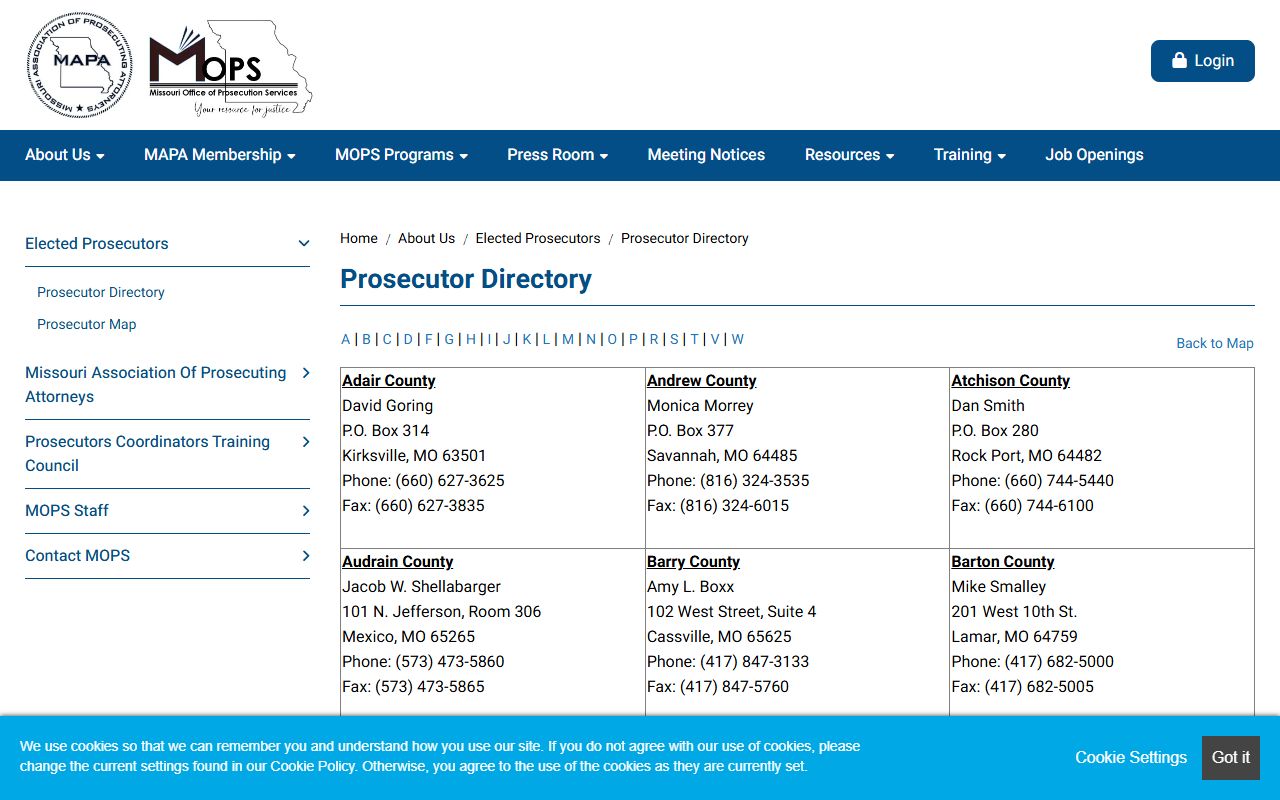
Once charges are filed, the court record tracks the case. The prosecutor's office is not the copy clerk for the court file.
Eligible defendants may deal with the Missouri State Public Defender rather than a records office. The research identifies District 34 Portageville as the public defender district for the region.
The Missouri State Public Defender office list is relevant to Mississippi County criminal court records because defense counsel may appear in the case record. It is an eligibility and defense-service channel, not a public records request portal.
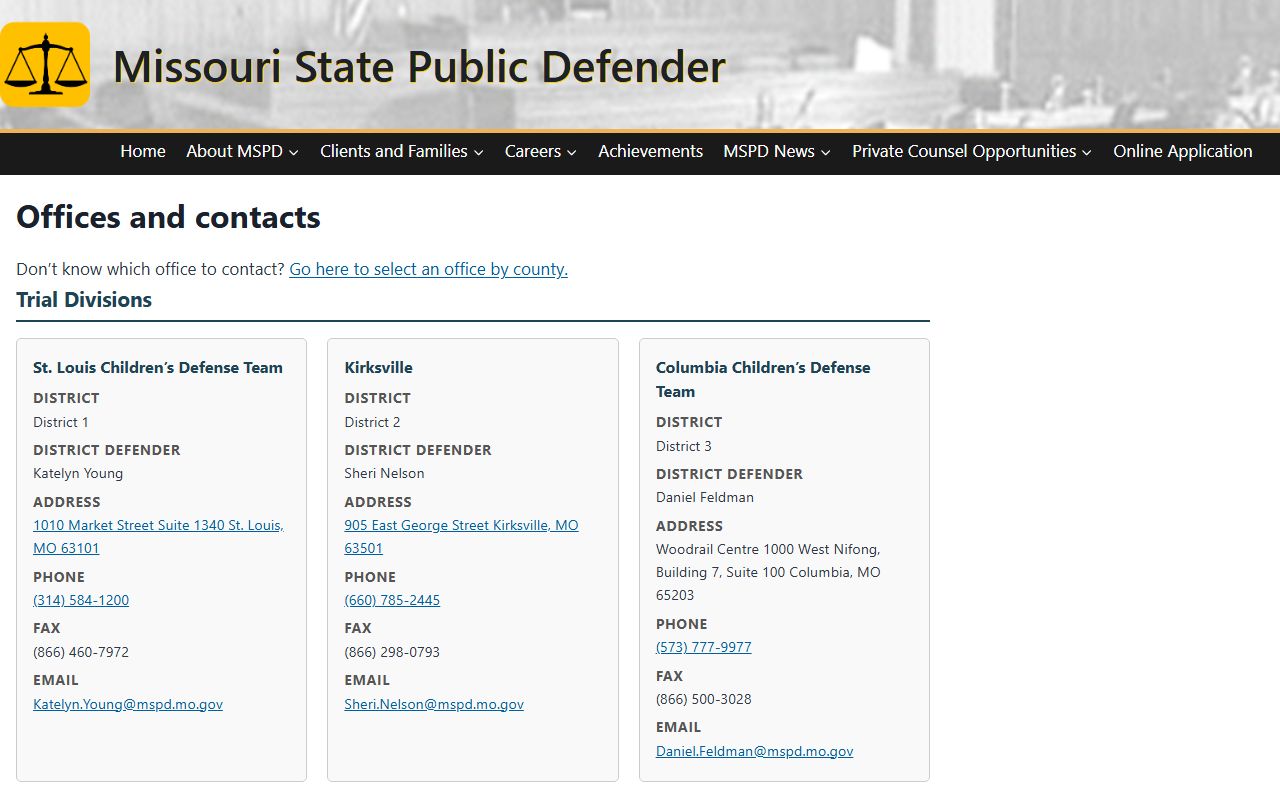
For the public record itself, Case.net and the Circuit Clerk remain the primary search and copy channels.
Sealed vs Expunged Records
Missouri closed records are restricted from general public access, but they are not simply erased. RSMo 610.120 says closed criminal records are inaccessible to the general public but are not destroyed. Expungement is a court process that closes qualifying records if statutory conditions are met.
| Sealed or Closed | Expunged | |
|---|---|---|
| Public View | Hidden from general public access | Closed after a granted expungement order |
| Record Existence | Record may still exist with the agency or court | Missouri law treats access as restricted, not automatic physical destruction |
| Authority | Court order, statute, or confidentiality rule | Statutory petition and court order when eligible |
| Common Limits | Juvenile, adoption, mental-health, and sealed materials | Eligibility, exclusions, waiting periods, and public-safety factors |
The Missouri arrest-record expungement statute is tied to Mississippi County criminal court records when an arrest led to dismissal, nolle prosequi, or not-guilty results. It gives a route for some arrest records to be expunged after statutory criteria are met.
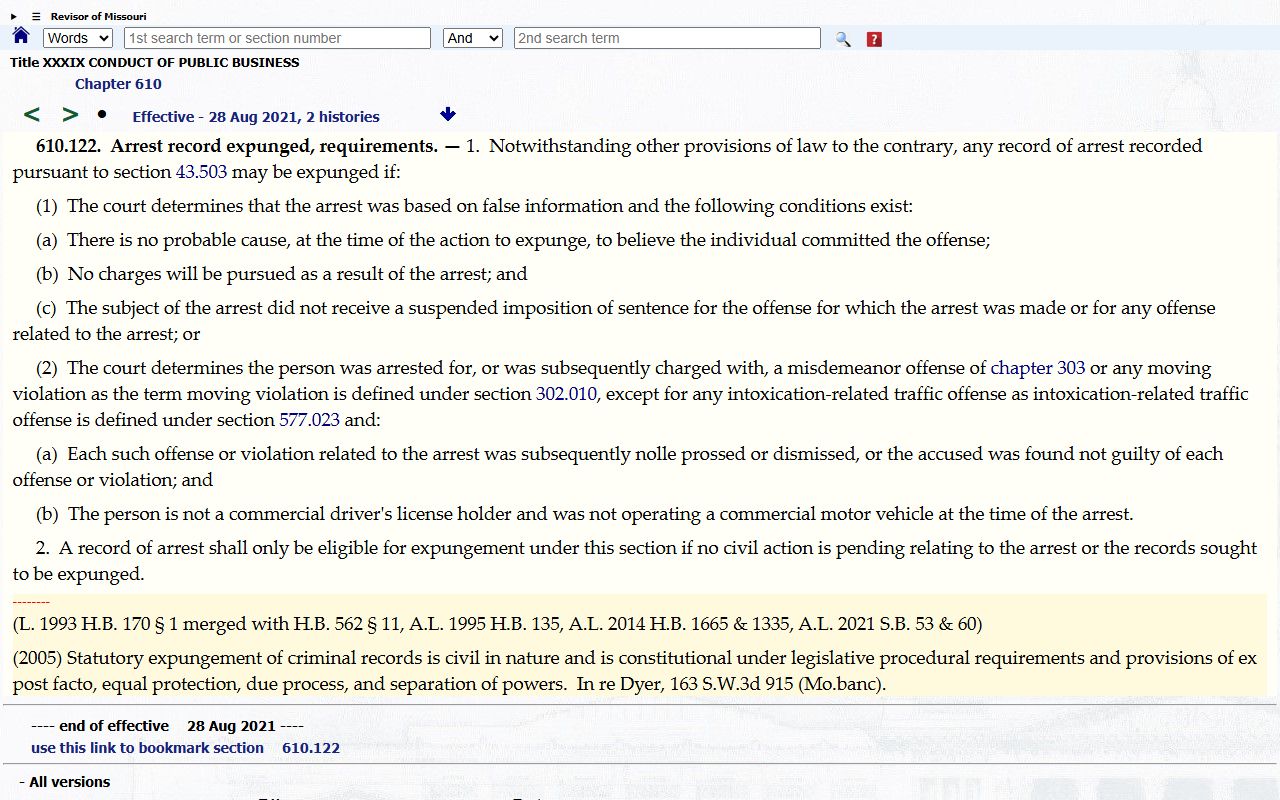
That arrest-record rule is narrower than the broader criminal expungement process and should not be treated as a blanket removal of every case.
The Missouri criminal expungement statute supplies the main process for certain Missouri criminal records. Mississippi County petitioners must file in the court with jurisdiction and name agencies holding the records.
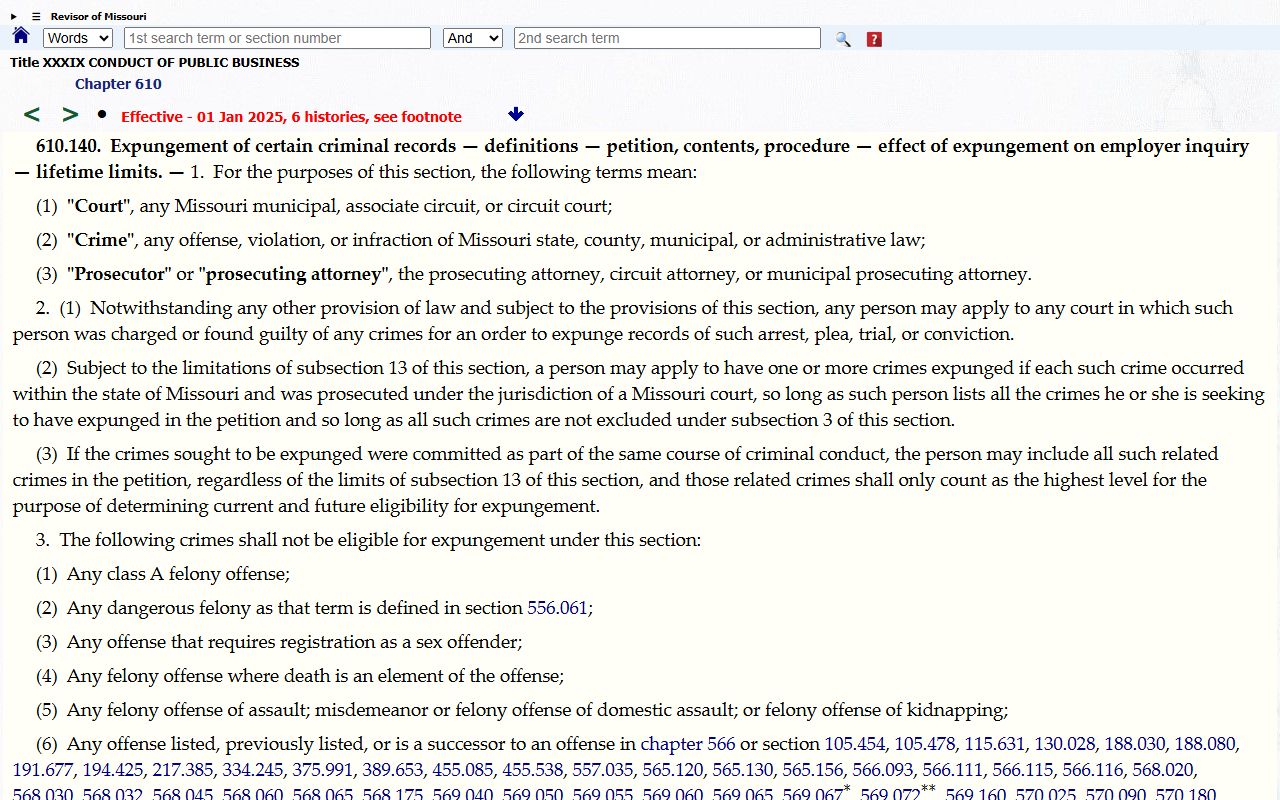
If expungement is granted, agencies close the records under Missouri law. The research cautions against promising destruction.
Public Criminal Court Access
Public access to Mississippi County criminal court records starts with Case.net and the Circuit Clerk. The Missouri Sunshine Law favors open public records, but court records are still subject to court rules, sealing orders, juvenile confidentiality, and statutes closing specific material. Dismissed or acquitted charges may have different expungement paths than convictions.
Juvenile records are restricted under RSMo 211.321. Adoption files and certain family records are not ordinary public criminal records. Medical, mental-health, Social Security, and child identifying details may be redacted. For custody status after a criminal case, use official jail or DOC channels rather than assuming the court docket shows current confinement.
Note: A public criminal docket may show a case event but not every document, exhibit, or sealed order.